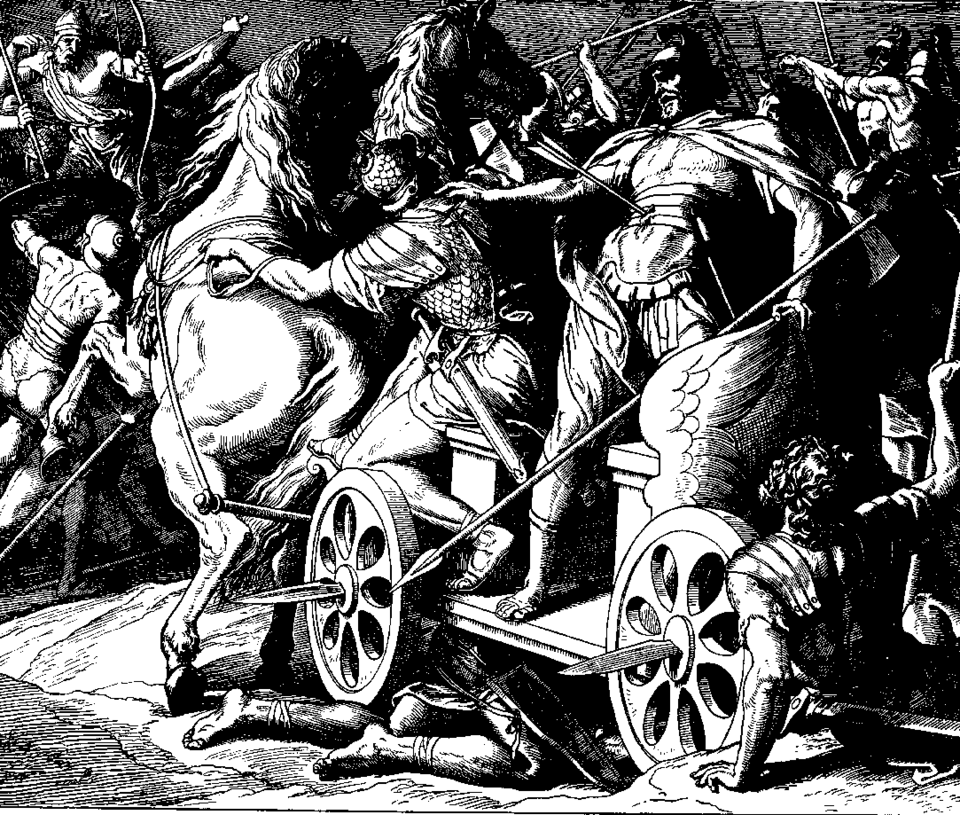
Conquest of Canaan and Fall of Jericho

Also known as: Joshua's Conquest, The Israelite Invasion of Canaan

c. 1406-1400 BCE (traditional) / 1230-1220 BCE (alternative) (scriptural)

The Israelite invasion and conquest of the Promised Land under Joshua’s leadership, beginning with the miraculous crossing of the Jordan River and the dramatic fall of Jericho’s walls after Israel marched around the city for seven days. This military campaign to take possession of Canaan—promised to Abraham’s descendants centuries earlier—represents the fulfillment of God’s covenant promises and the transition from wandering to settlement, though the incomplete nature of the conquest would shape Israel’s history for centuries.

The Biblical Narrative

Preparation and Commission

After Moses’s Death (Joshua 1:1-9):

  • “After the death of Moses the servant of the LORD”
  • “The LORD said to Joshua son of Nun, Moses’ aide”
  • “Moses my servant is dead”
  • “Now then, you and all these people, get ready to cross the Jordan”
  • “Into the land I am about to give to them—to the Israelites”
  • Promise renewed
  • Leadership transitions
  • New generation, new leader, same promise

God’s Promise (Joshua 1:3-5):

  • “Every place where you set your foot”
  • “I will give you, as I promised Moses”
  • Boundaries described: Desert to Lebanon, Euphrates to Mediterranean
  • “No one will be able to stand against you”
  • “All the days of your life”
  • “As I was with Moses, so I will be with you”
  • “I will never leave you nor forsake you”
  • Same divine presence Moses experienced
  • Guaranteed victory

Joshua’s Charge (Joshua 1:6-9):

  • “Be strong and courageous”
  • Repeated three times
  • “You will lead these people to inherit the land”
  • “Be careful to obey all the law Moses gave you”
  • “Do not turn from it to the right or to the left”
  • “Then you will be prosperous and successful”
  • “Keep this Book of the Law always on your lips”
  • “Meditate on it day and night”
  • Obedience essential
  • Torah-centered conquest
  • Not just military prowess but spiritual faithfulness

Rahab and the Spies

Reconnaissance (Joshua 2:1-7):

  • Joshua sent two spies to Jericho
  • “Go, look over the land, especially Jericho”
  • They entered house of Rahab the prostitute
  • King of Jericho heard about them
  • Sent men to capture spies
  • Rahab hid them on her roof
  • Under stalks of flax
  • Told pursuers they went another direction
  • Protected Israelite spies

Rahab’s Confession (Joshua 2:8-13):

  • Before spies slept, she came to roof
  • “I know that the LORD has given you this land”
  • “A great fear of you has fallen on us”
  • “Everyone living in this country is melting in fear”
  • “We have heard how the LORD dried up the water of the Red Sea”
  • “When you came out of Egypt”
  • “What you did to Sihon and Og, the Amorite kings”
  • “When we heard of it, our hearts melted”
  • “Everyone’s courage failed”
  • “For the LORD your God is God in heaven above and on the earth below”
  • Canaanite woman confessing Israel’s God
  • Faith born from hearing God’s mighty acts
  • Asks for mercy for her family
  • Covenant of protection

The Scarlet Cord (Joshua 2:15-21):

  • Rahab’s house built into city wall
  • Let spies down by rope through window
  • They told her: “Tie this scarlet cord in the window”
  • “Bring your family into your house”
  • “Anyone who goes outside will be killed”
  • “Anyone inside will be safe”
  • She agreed
  • Tied scarlet cord in window
  • Sign of protection
  • Foreshadowing salvation

Crossing the Jordan

Miraculous Passage (Joshua 3:1-17):

  • Israelites camped at Jordan
  • In flood stage
  • Overflowing its banks
  • Impossible to cross
  • God to Joshua: “Today I will begin to exalt you”
  • “As I exalted Moses”
  • Pattern repeating
  • Priests carrying ark of covenant to go first
  • “When their feet touch the water’s edge”
  • “The water will be cut off”
  • Waters stopped flowing
  • Piled up in heap
  • At Adam (town far upstream)
  • Israelites crossed on dry ground
  • Just like Red Sea
  • Same miracle, new generation
  • God demonstrating same power

Twelve Stones Memorial (Joshua 4:1-9, 19-24):

  • One man from each tribe
  • Take stone from middle of Jordan
  • Where priests stood
  • Carried to camp
  • Set up as memorial at Gilgal
  • “When your children ask, ‘What do these stones mean?’”
  • “Tell them: ‘Israel crossed the Jordan on dry ground’”
  • “The LORD your God dried up the Jordan’”
  • “Just as he did to the Red Sea”
  • “He did this so that all the peoples of the earth might know”
  • “That the hand of the LORD is powerful”
  • “And so that you might always fear the LORD your God”
  • Permanent reminder
  • Teaching future generations
  • Stones as testimony

The Fall of Jericho

Divine Strategy (Joshua 5:13-6:5):

  • Joshua near Jericho
  • Saw man with drawn sword
  • “Are you for us or for our enemies?”
  • Man replied: “Neither, but as commander of the army of the LORD I have now come”
  • Joshua fell facedown
  • “What message does my Lord have for his servant?”
  • Commander: “Take off your sandals, for the place where you are standing is holy”
  • Echo of burning bush
  • Divine warrior appears
  • God’s strategy revealed:
  • March around city once a day for six days
  • Seven priests carrying trumpets before ark
  • On seventh day, march around seven times
  • Priests blow trumpets
  • People shout
  • Walls will collapse
  • Strange military strategy
  • Victory through obedience, not conventional warfare

The March (Joshua 6:6-14):

  • Armed guard ahead of ark
  • Seven priests with trumpets
  • Ark of covenant
  • Rear guard
  • Trumpets sounding continuously
  • No other sound
  • Joshua commanded: “Do not give a war cry, do not raise your voices”
  • “Do not say a word until the day I tell you to shout”
  • “Then shout!”
  • Silent obedience
  • Once around city each day for six days
  • Returned to camp
  • Jericho’s residents watching
  • Bizarre siege

The Seventh Day (Joshua 6:15-21):

  • Rose at daybreak
  • Marched around city seven times
  • Same way
  • Only this day, seven times
  • Seventh time around
  • Priests blew trumpets
  • Joshua commanded: “Shout! For the LORD has given you the city!”
  • “The city and all that is in it are to be devoted to the LORD”
  • “Only Rahab the prostitute and all in her house shall be spared”
  • “Because she hid the spies we sent”
  • People shouted
  • Trumpets sounded
  • Walls collapsed
  • Everyone charged straight in
  • Took the city
  • Devoted everything to destruction
  • Except Rahab and her family
  • Brought them out safely
  • Scarlet cord marked the house
  • Faith rewarded

Ai and Achan’s Sin

Initial Defeat (Joshua 7:1-5):

  • Joshua sent men to spy out Ai
  • Small city
  • Spies returned: “Not all the army will have to go up against Ai”
  • “Send two or three thousand men”
  • “Do not weary the whole army, for only a few people live there”
  • About three thousand went up
  • Routed by men of Ai
  • Killed about thirty-six Israelites
  • Chased them from city gate to stone quarries
  • “Hearts of the people melted”
  • First defeat since entering Canaan
  • Shattered confidence

The Sin Revealed (Joshua 7:6-15):

  • Joshua tore clothes
  • Fell facedown before ark until evening
  • Elders did same
  • Put dust on heads
  • Joshua cried: “Why did you bring this people across Jordan?”
  • “To deliver us into the hands of the Amorites to destroy us?”
  • “If only we had been content to stay on the other side!”
  • “What can I say, now that Israel has been routed?”
  • LORD answered: “Stand up! What are you doing down on your face?”
  • “Israel has sinned”
  • “They have violated my covenant”
  • “They have taken some of the devoted things”
  • “They have stolen, they have lied, they have put them with their own possessions”
  • “That is why the Israelites cannot stand against their enemies”
  • “I will not be with you anymore unless you destroy whatever among you is devoted to destruction”
  • Sin in camp
  • Corporate responsibility
  • Holiness required for victory

Achan Exposed (Joshua 7:16-26):

  • Tribes brought forward
  • Judah taken
  • Clans of Judah
  • Zerahites taken
  • Families brought forward
  • Zimri’s family taken
  • Man by man
  • Achan son of Karmi selected
  • Joshua to Achan: “My son, give glory to the LORD”
  • “Tell me what you have done; do not hide it from me”
  • Achan replied: “It is true! I have sinned against the LORD”
  • “When I saw in the plunder a beautiful robe from Babylonia”
  • “Two hundred shekels of silver and a bar of gold”
  • “I coveted them and took them”
  • “They are hidden in the ground inside my tent”
  • Messengers ran, found them
  • Brought to Joshua and all Israelites
  • Spread them out before the LORD
  • Joshua and all Israel took Achan
  • Silver, robe, gold
  • His sons and daughters
  • Cattle, donkeys, sheep, tent
  • All he had
  • Valley of Achor
  • Joshua: “Why have you brought this trouble on us?”
  • “The LORD will bring trouble on you today”
  • All Israel stoned him
  • Burned them
  • Raised large pile of rocks over Achan
  • Remains to this day
  • Sin judged
  • Holiness restored

Victory at Ai (Joshua 8:1-29):

  • After purging sin
  • LORD to Joshua: “Do not be afraid; do not be discouraged”
  • “Take the whole army with you, and go up and attack Ai”
  • “I have delivered into your hands the king of Ai”
  • “His people, his city and his land”
  • Divine strategy: Ambush
  • Set ambush behind city
  • Main force attacks from front
  • City defenders come out
  • Israelites feign retreat
  • Draw defenders away from city
  • Ambush enters undefended city
  • Sets it on fire
  • Ai’s men trapped between two forces
  • Total victory
  • Entire population destroyed
  • City burned
  • King hanged on pole until evening
  • Then thrown at city gate entrance
  • Large pile of rocks over him
  • Israel took livestock and plunder
  • This time, by God’s permission
  • Victory through strategy and obedience

The Southern Campaign

Gibeon’s Deception (Joshua 9:1-27):

  • Gibeonites heard what Joshua did
  • Feared being destroyed
  • Resorted to ruse
  • Wore old clothes, patched sandals
  • Carried worn wineskins, dry moldy bread
  • Came to Joshua at Gilgal
  • “We have come from distant country”
  • “Make a treaty with us”
  • Israelites suspicious: “Perhaps you live near us”
  • Gibeonites showed worn items as proof of long journey
  • Joshua made treaty of peace
  • Swore oath not to harm them
  • Three days later discovered Gibeonites were neighbors
  • Treaty couldn’t be broken (oath in LORD’s name)
  • Made them woodcutters and water carriers
  • Consequence of not seeking God’s counsel

Sun Stands Still (Joshua 10:1-15):

  • Five Amorite kings alarmed
  • Gibeon made peace with Israel
  • Attacked Gibeon
  • Gibeonites sent to Joshua: “Come up to us quickly and save us!”
  • Joshua marched all night from Gilgal
  • LORD threw Amorites into confusion
  • Israel struck them with great victory
  • As they fled, LORD hurled large hailstones
  • More died from hail than from Israelite swords
  • Joshua prayed: “Sun, stand still over Gibeon”
  • “And moon, over the Valley of Aijalon”
  • “The sun stopped in the middle of the sky”
  • “And delayed going down about a full day”
  • “There has never been a day like it before or since”
  • “The LORD fought for Israel”
  • Miraculous extension of daylight
  • To complete victory
  • Most debated miracle in Joshua

Southern Cities Fall (Joshua 10:16-43):

  • Five kings hid in cave at Makkedah
  • Joshua had large rocks rolled against cave mouth
  • After battle, brought kings out
  • Army commanders put feet on kings’ necks
  • Joshua: “Do not be afraid; do not be discouraged”
  • “Be strong and courageous”
  • “This is what the LORD will do to all the enemies you are going to fight”
  • Joshua struck down kings
  • Hung on five poles until evening
  • Threw into cave, sealed with large rocks
  • Continued campaign
  • Makkedah, Libnah, Lachish, Eglon, Hebron, Debir
  • City after city fell
  • “Joshua subdued the whole region”
  • “Hill country, the Negev, western foothills, mountain slopes”
  • “All their kings”
  • “Left no survivors”
  • “Totally destroyed all who breathed”
  • “Just as the LORD, the God of Israel, had commanded”
  • Then returned to camp at Gilgal

The Northern Campaign

Coalition Defeated (Joshua 11:1-15):

  • Jabin king of Hazor heard
  • Sent word to northern kings
  • “Came out with all their troops”
  • “A huge army, as numerous as the sand on the seashore”
  • “With very many horses and chariots”
  • Camped together at Waters of Merom
  • To fight against Israel
  • LORD to Joshua: “Do not be afraid of them”
  • “By this time tomorrow I will hand all of them”
  • “Slain over to Israel”
  • “You are to hamstring their horses”
  • “Burn their chariots”
  • Joshua and army came against them suddenly
  • Waters of Merom
  • LORD gave them into Israel’s hand
  • Pursued to Greater Sidon, Misrephoth Maim, Valley of Mizpah
  • Left no survivors
  • Hamstrung horses, burned chariots
  • Joshua captured Hazor
  • Struck down its king
  • Hazor burned
  • Only city Joshua burned in north
  • Israel took plunder and livestock
  • But put people to sword
  • Until destroyed them
  • Left none who breathed
  • “As the LORD commanded his servant Moses”
  • “So Moses commanded Joshua”
  • “And Joshua did it”
  • “He left nothing undone of all the LORD commanded Moses”

Summary of Conquest

Land Taken (Joshua 11:16-23):

  • “Joshua took this entire land”
  • Hill country, all the Negev, whole region of Goshen
  • Western foothills, Arabah, mountains of Israel with foothills
  • From Mount Halak toward Seir
  • To Baal Gad in Lebanon Valley below Mount Hermon
  • Captured all their kings
  • Struck them down, put them to death
  • “Joshua waged war against all these kings for a long time”
  • Not a quick campaign
  • Extended military effort
  • “Except the Hivites living in Gibeon”
  • “Not one made treaty of peace with Israelites”
  • “All were taken in battle”
  • “For it was the LORD himself who hardened their hearts”
  • “To wage war against Israel”
  • “So that he might destroy them totally”
  • “Without mercy, as the LORD had commanded Moses”

Anakites Destroyed (Joshua 11:21-22):

  • Joshua destroyed Anakites
  • From hill country: Hebron, Debir, Anab
  • All hill country of Judah and Israel
  • Joshua totally destroyed them and their towns
  • No Anakites left in Israelite territory
  • Only in Gaza, Gath, Ashdod
  • Giants eliminated
  • Obstacles removed

Rest from War (Joshua 11:23):

  • “Joshua took the entire land”
  • “Just as the LORD had directed Moses”
  • Gave it as inheritance to Israel
  • According to tribal divisions
  • “Then the land had rest from war”
  • Temporary peace
  • Preparation for settlement

Land Distribution

Dividing the Inheritance (Joshua 13-21):

  • Land divided among tribes by lot
  • Detailed boundaries given
  • Cities of refuge designated
  • Six cities where someone who killed accidentally could flee
  • Levitical cities assigned
  • 48 cities for Levites throughout all tribal territories
  • Altar built at Jordan by eastern tribes
  • Almost caused civil war (misunderstanding resolved)
  • Each tribe receives territory
  • Promise fulfilled

Joshua’s Farewell

Final Charge (Joshua 23:1-16):

  • “After a long time had passed”
  • “LORD had given Israel rest from all their enemies”
  • Joshua old and well advanced in years
  • Summoned all Israel
  • Elders, leaders, judges, officials
  • “I am now old and well advanced in years”
  • “You yourselves have seen everything the LORD your God has done”
  • “To all these nations for your sake”
  • “It was the LORD your God who fought for you”
  • Warning: “Be very strong; be careful to obey all that is written in the Book of the Law of Moses”
  • “Do not associate with these nations that remain among you”
  • “Do not invoke the names of their gods or swear by them”
  • “Do not serve them or bow down to them”
  • “Hold fast to the LORD your God, as you have until now”
  • Promise: Obedience brings continued blessing
  • Warning: Disobedience brings disaster
  • “If you violate the covenant”
  • “His anger will burn against you”
  • “You will quickly perish from the good land he has given you”

Covenant Renewal at Shechem (Joshua 24:1-28):

  • Joshua assembled all tribes at Shechem
  • Recounted history: Abraham called, Isaac given, Jacob and Esau
  • Exodus from Egypt, wilderness wandering, conquest victories
  • “It was not by your sword or bow”
  • “I gave you a land on which you did not toil”
  • “Cities you did not build”
  • “Vineyards and olive groves you did not plant”
  • All God’s work
  • “Now fear the LORD and serve him with all faithfulness”
  • “Throw away the gods your ancestors worshiped”
  • “Beyond the Euphrates River and in Egypt”
  • “Serve the LORD”
  • “But if serving the LORD seems undesirable to you”
  • “Then choose for yourselves this day whom you will serve”
  • “Whether the gods your ancestors served beyond the Euphrates”
  • “Or the gods of the Amorites”
  • “But as for me and my household, we will serve the LORD”
  • Famous declaration
  • People responded: “Far be it from us to forsake the LORD”
  • “We too will serve the LORD, because he is our God”
  • Joshua set up large stone under oak near holy place
  • Witness to covenant
  • Sent people away to their inheritances

Joshua’s Death (Joshua 24:29-31):

  • “After these things, Joshua son of Nun, the servant of the LORD, died”
  • 110 years old
  • Buried at Timnath Serah in hill country of Ephraim
  • “Israel served the LORD throughout the lifetime of Joshua”
  • “And of the elders who outlived him”
  • “And who had experienced everything the LORD had done for Israel”
  • Faithfulness of one generation
  • Question for the next

Theological Significance in Judaism

Fulfillment of Promise

Land Given:

  • Promise to Abraham: “To your descendants I give this land” (Genesis 15:18)
  • Renewed to Isaac and Jacob
  • Finally fulfilled under Joshua
  • Centuries of waiting
  • God keeps His word
  • Covenant faithfulness demonstrated

Inheritance Secured:

  • Each tribe receives portion
  • Family inheritances established
  • Permanent settlement begins
  • From nomadic to settled
  • Identity tied to land
  • Physical territory expressing spiritual relationship

Torah Obedience Central

Success Through Obedience:

  • Joshua 1:8: “Keep this Book of the Law always on your lips”
  • “Meditate on it day and night”
  • Obedience leads to victory
  • Disobedience (Achan) leads to defeat
  • Not just military strength
  • Spiritual faithfulness essential
  • Torah-centered life

Incomplete Conquest

Not All Land Taken:

  • Joshua 13:1: “There are still very large areas of land to be taken over”
  • Judges 1 details unconquered territories
  • Canaanites remained in many areas
  • Israel didn’t fully obey
  • Set stage for future conflicts
  • Incomplete obedience, incomplete victory
  • Book of Judges shows consequences

Divine Warrior

LORD Fights for Israel:

  • Not by Israel’s might
  • God throws enemies into confusion
  • Sends hailstones
  • Stops the sun
  • Collapses walls
  • “The LORD your God fought for you” (Joshua 23:3)
  • Victory attributed to God
  • Israel’s role: Obedience

Christian Perspective

Joshua as Type of Christ

Name Connection:

  • Joshua (Hebrew: Yehoshua) = “The LORD saves”
  • Jesus (Greek: Iesous) = Same meaning
  • Same name
  • Joshua brings Israel into promised land
  • Jesus brings believers into eternal rest
  • Physical deliverance vs. spiritual deliverance

Hebrews 4:8-9:

  • “If Joshua had given them rest”
  • “God would not have spoken later about another day”
  • “There remains, then, a Sabbath-rest for the people of God”
  • Joshua’s rest incomplete, temporary
  • Points to greater rest in Christ
  • Promised land shadows heavenly reality

Rahab’s Faith

Hebrews 11:30-31:

  • “By faith the walls of Jericho fell”
  • “After the army had marched around them for seven days”
  • “By faith the prostitute Rahab”
  • “Because she welcomed the spies”
  • “Was not killed with those who were disobedient”
  • Gentile woman saved by faith
  • Included in “Hall of Faith”
  • Grace to outsider

James 2:25:

  • “Was not even Rahab the prostitute considered righteous for what she did”
  • “When she gave lodging to the spies and sent them off in a different direction?”
  • Faith demonstrated by works
  • Actions proved faith real
  • Example of living faith

Matthew 1:5:

  • Rahab in Jesus’s genealogy
  • Married Salmon
  • Mother of Boaz
  • Great-great-grandmother of David
  • Ancestor of Jesus
  • Canaanite prostitute in Messiah’s line
  • Scandalous grace

The Scarlet Cord

Symbol of Salvation:

  • Scarlet cord in window
  • Protected Rahab’s house
  • Like blood on doorposts at Passover
  • Red = blood
  • Salvation through blood
  • Foreshadows Christ’s blood
  • Protection from judgment

Conquest and Judgment

Canaanite Destruction:

  • Difficult passage for modern readers
  • Ancient Near Eastern warfare context
  • Canaanites’ wickedness (Leviticus 18:24-25)
  • “Land vomited out its inhabitants”
  • Divine judgment, not genocide
  • God’s patience exhausted (Genesis 15:16: “sin of Amorites not yet reached full measure”)
  • Israel as instrument of judgment
  • Points to final judgment
  • All will answer to God

Islamic Perspective

Yusha (Joshua) in Islamic Tradition

Prophet and Leader:

  • Yusha ibn Nun mentioned in hadith and Islamic tradition
  • Not extensively in Quran
  • Considered prophet by some scholars
  • Succeeded Musa as leader of Israelites
  • Led conquest of Holy Land
  • Faithful servant of Allah

Conquest of Jerusalem:

  • Islamic tradition: Yusha conquered Jerusalem
  • First Muslim conquest of the city
  • Significant in Islamic history
  • Establishes Islamic connection to Jerusalem
  • Precedes later Muslim conquests

The Stopped Sun:

  • Hadith references sun being stopped
  • For Yusha to complete battle before Sabbath
  • Similar to biblical account
  • Demonstrates Allah’s power over creation
  • Miracle authenticating prophet

Bani Isra’il (Children of Israel)

Chosen People:

  • Quran acknowledges Allah favored Israelites
  • Gave them the land
  • Delivered them from Fir’awn
  • Sent prophets among them
  • Special role in salvation history
  • Before final revelation to Muhammad

Warning Against Disobedience:

  • Israelites’ later disobedience
  • Loss of divine favor
  • Quran uses their history as warning
  • Obedience brings blessing
  • Disobedience brings judgment
  • Pattern for all believers

Historical and Archaeological Questions

The Jericho Problem

Archaeological Evidence:

  • Kathleen Kenyon’s excavations (1950s)
  • Found no evidence of city ca. 1400 BCE
  • Or ca. 1230 BCE
  • Walls from earlier period (Bronze Age)
  • But destroyed and abandoned long before traditional dates
  • No Late Bronze Age fortifications
  • Problem for historicity

Alternative Views:

  • Bryant Wood: Redate evidence to 1400 BCE
  • Claims Kenyon misdated pottery
  • Evidence does support conquest at earlier date
  • Other scholars disagree
  • Minimalists: No historical conquest, later invention
  • Moderates: Core historical event, details liturgical/theological
  • Traditionalists: Archaeological absence doesn’t prove historical absence

Conquest Model Debates

Three Main Theories:

  1. Military Conquest (traditional, Joshua’s account)
    • Sudden invasion
    • Systematic destruction
    • Archaeological evidence mixed
  2. Peaceful Infiltration
    • Gradual settlement
    • Nomadic Israelites slowly settling
    • Less violent than portrayed
  3. Peasant Revolt
    • Indigenous Canaanites rebelling
    • Against city-state overlords
    • “Israelites” = Canaanite rebels
    • Adopting new identity

Current Scholarly Consensus:

  • Likely combination of factors
  • Some military conflict
  • Some peaceful settlement
  • Some assimilation
  • Process more complex than Joshua suggests
  • Judges 1 hints at gradual, incomplete conquest

The Sun Standing Still

Scientific Impossibility:

  • Earth’s rotation cannot stop without catastrophic effects
  • Laws of physics
  • No extra-biblical records of extended day

Interpretations:

  • Literal miracle: God suspended natural law
  • Poetic language: Victory seemed to last forever
  • Eclipse or other atmospheric phenomenon
  • Ancient Near Eastern hyperbole common in victory accounts
  • Theological truth more important than scientific explanation

Dating the Conquest

Two Main Options:

  1. Early Date: c. 1406 BCE
    • Based on 1 Kings 6:1 (480 years from Exodus to Temple)
    • Exodus 1446 BCE, conquest 1406 BCE
    • Fits some archaeological data
  2. Late Date: c. 1230-1220 BCE
    • Based on Exodus 1:11 (Rameses II)
    • Exodus 1270s BCE, conquest 1230s BCE
    • Fits other archaeological evidence
    • More scholarly support currently

Conclusion:

  • No consensus
  • Evidence interpreted differently depending on presuppositions
  • Faith doesn’t require archaeological proof
  • Core narrative theologically true

Symbolism and Themes

Crossing Jordan

Second Red Sea:

  • Parallel to Red Sea crossing
  • Same miracle, new generation
  • Demonstrates God’s continuing power
  • Joshua validated like Moses
  • Entry into promised land like exodus from slavery
  • Water crossing = transition
  • Old to new

Baptism Connection:

  • Passing through water to new life
  • Leaving wilderness, entering inheritance
  • Death to wandering, life in land
  • Christian baptism symbolism

The Number Seven

Seven at Jericho:

  • Seven days of marching
  • Seven priests
  • Seven trumpets
  • Seven times around on seventh day
  • Seven = completeness, perfection
  • Divine number
  • God’s perfect plan executed
  • Victory through liturgical obedience

Rahab the Outsider

Grace to Gentiles:

  • Canaanite woman
  • Prostitute
  • Outsider
  • Yet saved by faith
  • Included in covenant community
  • Shows God’s mercy extends beyond Israel
  • Faith, not ethnicity, saves
  • Foreshadows gospel to Gentiles

The Devoted Things

Holiness and Judgment:

  • Jericho “devoted to the LORD”
  • Everything destroyed or given to treasury
  • Cannot be taken for personal use
  • Achan’s sin: Taking devoted things
  • Consequence: Corporate defeat
  • Holiness required
  • Sin affects community
  • Purging necessary for victory

Modern Significance

Spiritual Warfare

Not Against Flesh and Blood:

  • Jericho’s walls: Spiritual strongholds
  • Marching, trumpets, shouts: Spiritual weapons
  • “Not by might nor by power, but by my Spirit” (Zechariah 4:6)
  • Prayer, worship, obedience
  • God fights our battles
  • Victory through faith

Incomplete Obedience

Partial Victory:

  • Israel didn’t fully conquer
  • Left enemies in land
  • Became snares later (Judges 2:3)
  • Incomplete obedience = incomplete victory
  • Besetting sins not fully dealt with
  • Come back to trouble us
  • Need for thorough repentance

Choose This Day

Joshua 24:15:

  • “Choose for yourselves this day whom you will serve”
  • Every generation must decide
  • Faith not inherited
  • Personal commitment required
  • “As for me and my household, we will serve the LORD”
  • Individual and corporate decision
  • Ongoing choice

Entering Rest

Hebrews 4:

  • Joshua brought them into land
  • But not ultimate rest
  • True rest in Christ
  • Stop striving
  • Trust God’s finished work
  • Sabbath rest for people of God
  • Already and not yet

Artistic and Cultural Legacy

Art:

  • Jericho’s walls falling: Countless depictions
  • Medieval manuscripts, Renaissance paintings
  • Dramatic visual: Walls crumbling, trumpets blowing
  • Rahab’s scarlet cord
  • Joshua and sun standing still

Music:

  • “Joshua Fit the Battle of Jericho” - African American spiritual
  • “And the walls came tumbling down”
  • Handel’s Joshua oratorio
  • Spirituals celebrating divine deliverance

Language:

  • “Walls of Jericho” = insurmountable obstacles
  • “The walls came tumbling down” = sudden collapse of barriers
  • “Choose this day” = call to decision

Civil Rights Movement:

  • Jericho imagery in freedom songs
  • Walls of segregation tumbling down
  • Joshua as liberator
  • Promised land as justice and equality
  • Rahab as outsider welcomed in

Significance

They stood at the edge. Forty years of wandering were over. The generation that left Egypt had died in the wilderness. Their children—who grew up hearing stories of plagues and parted seas and manna from heaven—now stood at the Jordan. And it was flood season. The river was impassable. Swollen banks, rushing current, no way across. The promised land visible on the other side but unreachable.

Then the priests carrying the ark stepped into the water. And the moment their feet touched the edge, the waters stopped. Piled up upstream. The riverbed became dry ground. And an entire nation crossed over. Just like their parents at the Red Sea. Same God. Same power. New generation. Same faithfulness.

Jericho waited. Massive walls. Fortified city. Military stronghold. Impossible to take. And God’s strategy? March around it. For seven days. In silence. Carrying the ark. Blowing trumpets. Then on the seventh day, march seven times. And shout. That’s the battle plan. No siege engines. No scaling ladders. Just obedience.

And the walls fell. Collapsed straight down. The entire Israelite army charged in. The city devoted to the LORD fell without a conventional battle. Victory through worship. Through liturgical obedience. Through faith that God fights for His people.

But then Ai. A small town. Should have been easy after Jericho. And Israel was routed. Thirty-six men died. The first defeat. Because Achan took what was devoted to God. One man’s sin brought corporate defeat. The lesson cut deep: Holiness matters. Sin in the camp affects everyone. Until it’s purged, victory is impossible.

After Achan was judged, Ai fell. Then city after city. The southern coalition. The northern alliance. Kings fell. Canaanites defeated. Not by Israel’s strength—by God’s power. The sun stood still at Gibeon so Joshua could finish the battle. Hailstones fell from heaven. The LORD fought for Israel.

But the conquest was incomplete. Joshua 13:1: “You are now very old, and there are still very large areas of land to be taken over.” They didn’t finish the job. Left Canaanites in the land. Made treaties they shouldn’t have made. Spared people they should have driven out. And those unconquered pockets became thorns in their sides for centuries. The book of Judges chronicles the cost of incomplete obedience.

For Jews, Joshua’s conquest fulfills the promise to Abraham. “To your descendants I will give this land.” Six hundred years from promise to fulfillment. God keeps His word. The land inheritance establishes tribal territories that define Jewish identity for millennia. Even in exile, they remember: These are our portions. This is our land. God gave it to us through Joshua.

For Christians, Joshua is Jesus. Same name. “The LORD saves.” Joshua brought Israel into the physical promised land. Jesus brings believers into eternal rest. The land was shadow. Heaven is substance. And Rahab the prostitute, saved by faith and a scarlet cord, appears in Jesus’s genealogy. The outsider becomes insider. The Canaanite becomes ancestor of Messiah. Scandalous grace written into the family tree.

The scarlet cord saved Rahab’s household like blood on doorposts saved Israel in Egypt. Red thread of redemption running through Scripture. Protection from judgment through blood. Pointing to the cross where Jesus’s blood saves all who trust in Him—Jew or Gentile, insider or outsider, righteous or prostitute. Faith, not ethnicity, brings salvation.

The walls of Jericho fell to shouts and trumpets. Paul wrote: “The weapons of our warfare are not of the flesh but have divine power to destroy strongholds” (2 Corinthians 10:4). We still face Jerichos. Obstacles that seem insurmountable. And God still says: March. Worship. Obey. Shout. Watch Me work. I’ll fight for you.

And Joshua’s final challenge echoes through the ages: “Choose this day whom you will serve.” Not tomorrow. Not someday. Today. This day. The decision can’t be deferred. And the declaration of faith: “As for me and my household, we will serve the LORD.” Personal commitment. Family commitment. Covenant renewed in every generation.

They crossed the Jordan on dry ground. They conquered the land. They divided the inheritance. Each tribe received its portion. The promise was fulfilled. The land had rest from war. For a while.

But Hebrews says: “If Joshua had given them rest, God would not have spoken later about another day. There remains, then, a Sabbath-rest for the people of God” (Hebrews 4:8-9). The conquest was incomplete. The rest was temporary. The land would be lost and regained and lost again. Because Joshua’s victory pointed beyond itself to the greater Joshua—Jesus—who wins the final victory, defeats the ultimate enemy, and brings His people into the true promised land where they will rest forever.

The walls fell once at Jericho. They will fall again. Every barrier between humanity and God. Every stronghold of sin and death. Every wall of hostility and division. Christ destroyed them all at the cross. And one day every knee will bow. Every wall will crumble. Every enemy will be under His feet. And the conquest begun at Jericho will be complete. The promised land fully possessed. The rest eternally secured. The victory totally won.

“Choose this day whom you will serve.” Joshua chose. Rahab chose. The people chose at Shechem. The choice is still before us. Every day. Every moment. Whom will you serve? Choose.

Illustrations