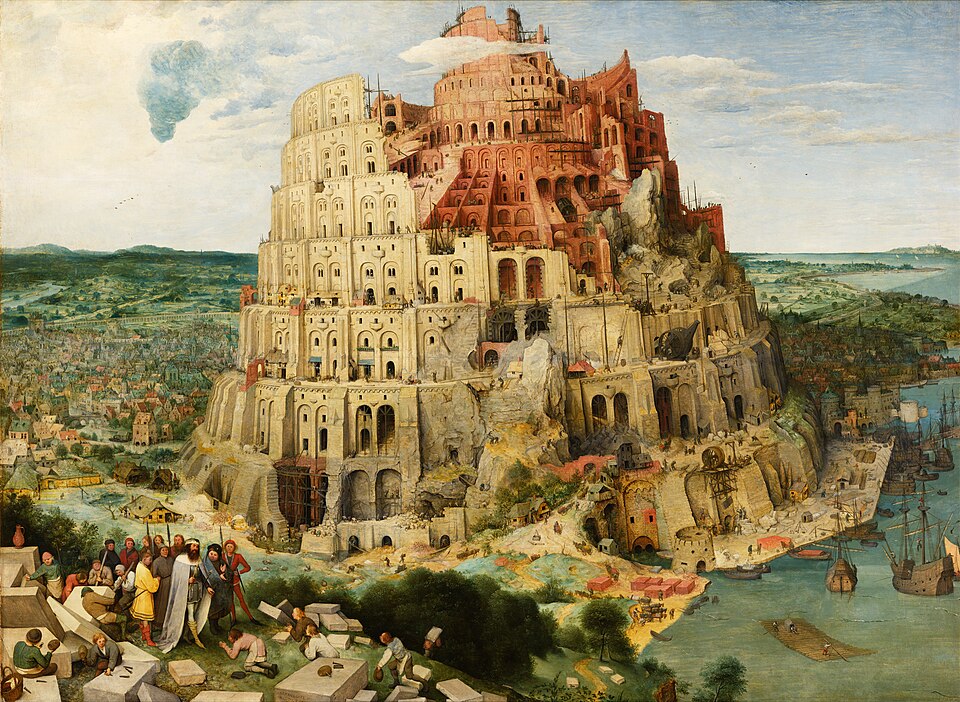
Tower of Babel
The account of humanity united by one language attempting to build a tower reaching to heaven, resulting in God confusing their speech and scattering them across the earth. This brief but profound narrative explains the origin of diverse languages and nations while illustrating the dangers of human pride and the futility of seeking glory apart from God.
The Biblical Narrative
One Language, One Purpose
United Humanity (Genesis 11:1-2):
- “The whole earth had one language and the same words”
- People migrated from the east
- Found a plain in the land of Shinar (Mesopotamia/Babylon)
- Settled there
- Unity of language and location
The Plan (Genesis 11:3-4):
- Said to one another: “Come, let us make bricks and burn them thoroughly”
- Had brick for stone, bitumen for mortar
- Technology and cooperation
- Then: “Come, let us build ourselves a city”
- “And a tower with its top in the heavens”
- “Let us make a name for ourselves”
- “Lest we be dispersed over the face of the whole earth”
- Pride and self-glorification
- Fear of scattering (ironic, since God commanded to fill the earth)
Divine Response
God Comes Down (Genesis 11:5):
- “The LORD came down to see the city and the tower”
- Irony: Tower “reaching to heaven” so small God must descend to see it
- Human pretensions vs. divine reality
- God’s attention drawn by their ambition
God’s Assessment (Genesis 11:6):
- “Behold, they are one people, and they have all one language”
- “This is only the beginning of what they will do”
- “Nothing that they propose to do will now be impossible for them”
- Unlimited potential for unified humanity
- Could be used for good or evil
- At this moment, being used for pride
The Judgment (Genesis 11:7):
- “Come, let us go down” (divine council, like Genesis 1:26)
- “Confuse their language”
- “That they may not understand one another’s speech”
- Communication breakdown
- Unity destroyed
- Cooperation impossible
The Scattering
Dispersed (Genesis 11:8-9):
- “So the LORD dispersed them from there over the face of all the earth”
- Stopped building the city
- Therefore its name: Babel (sounds like Hebrew “balal” = confuse)
- “Because there the LORD confused the language of all the earth”
- “From there the LORD dispersed them over the face of all the earth”
- What they feared happened
- What they sought to prevent, God enacted
- Divine will accomplished
Theological Significance
Human Pride and Ambition
“Make a Name for Ourselves”:
- Self-glorification instead of glorifying God
- Building monument to human achievement
- Tower to reach heaven by human effort
- Autonomy from God
- “We can be like God” (echo of Eden)
Collective Sin:
- Not individuals but whole humanity
- United in pride
- Corporate rebellion
- Organized defiance
- Technology serving arrogance
Fear of Scattering:
- God commanded: “Fill the earth” (Genesis 9:1)
- They refused: “Lest we be dispersed”
- Disobedience masked as cooperation
- Staying together = staying in control
- Spreading out = trusting God’s provision
Divine Judgment and Mercy
The Confusion:
- Not destroying them (like flood)
- But disrupting their unity
- Language as barrier
- Forced humility
- Cannot accomplish prideful goals
- Judgment proportionate to sin
Scattering as Blessing:
- Fulfills original command to fill earth
- Diversity of cultures, languages, nations
- Prevents unified tyranny
- Decentralizes power
- No global empire of evil
Ironic Reversal:
- Tried to reach heaven—God came down
- Sought to make a name—city called “Confusion”
- Feared scattering—God scattered them
- Wanted to stay—God dispersed
- Human plans thwarted
Jewish Interpretation
Rabbinic Commentary
The Tower’s Purpose:
- Midrash: Some wanted to storm heaven and make war on God
- Others: Wanted to set up idol at top
- Others: Scientific curiosity about heavens
- All agree: Motivated by pride
Nimrod the Builder:
- Though not named in Genesis 11, tradition identifies Nimrod (Genesis 10:8-10) as instigator
- “Mighty hunter before the LORD”
- Founded Babel
- Rebel against God
- Archetype of tyrant
The Languages:
- Tradition: 70 languages created (corresponding to 70 nations in Genesis 10)
- Each group given different tongue
- Morning: all understood each other
- Evening: could not communicate
- Sudden, miraculous confusion
Theological Lessons
Unity Without God:
- Unified humanity can accomplish great evil
- Without God, power corrupts
- Diversity protects against tyranny
- Scattering was grace
Tower vs. Tabernacle:
- Humans build tower to reach heaven
- God commands tabernacle so He can dwell with them
- Bottom-up vs. top-down
- Human effort vs. divine condescension
- Pride vs. worship
Christian Perspective
Pentecost Reversal
Acts 2:1-11:
- Holy Spirit descends at Pentecost
- Disciples speak in various languages
- Everyone hears in their own tongue
- Babel reversed
- What Babel divided, Pentecost unites
- Not by human effort but divine gift
- Not one language but understanding despite many
- Unity in diversity through Spirit
The New Unity:
- Not eliminating languages
- But transcending language barrier
- Gospel proclaimed to all nations
- Church from every tribe and tongue
- Unity not uniformity
- Christ reconciles diversity
From Confusion to Clarity:
- Babel: Confusion of speech
- Pentecost: Clarity of gospel
- Babel: Scattering in judgment
- Pentecost: Gathering in grace
- Babel: Human pride
- Pentecost: Divine humility (God speaks our languages)
Eschatological Hope
Revelation 7:9:
- Great multitude from every nation, tribe, people, language
- Standing before throne
- Diversity preserved in eternity
- Unity in worship
- Babel’s scattering redeemed, not erased
Islamic Perspective
Quranic References
Indirect Mention:
- Quran doesn’t tell Babel story explicitly
- Quran 2:102 mentions Babylon in context of sorcery
- Islamic tradition aware of the account through biblical sources
- Less emphasis in Islamic theology
Themes Resonate:
- Divine judgment on pride (Pharaoh, other tyrants)
- Allah humbles the arrogant
- Tower-building hubris appears in other contexts
- Unity under tawhid (monotheism) not human ambition
Historical and Archaeological Questions
The Ziggurats
Mesopotamian Context:
- Ziggurats: Stepped temple-towers in ancient Mesopotamia
- Babel likely refers to Babylon
- Etemenanki: Great ziggurat in Babylon
- Name means “House of the Foundation of Heaven and Earth”
- Dedicated to Marduk
- Destroyed and rebuilt multiple times
Description:
- Herodotus described it (5th century BCE)
- Base 300 feet square
- Similar height
- Seven levels
- Temple at top
- Matches biblical description generally
Connections:
- Genesis 11 may preserve memory of these structures
- “Bricks” and “bitumen” accurate for Mesopotamian building
- Shinar = Sumer/Babylonia
- Etiological story explaining ruins
- Historical kernel in narrative form
Languages and Nations
Origin of Diversity:
- Biblical account: Miraculous, instantaneous
- Linguistics: Languages evolved over millennia
- Common ancestral languages (Proto-Indo-European, etc.)
- Divergence through migration, isolation
- Tower account theological, not scientific
The Table of Nations:
- Genesis 10 lists 70 nations descended from Noah’s sons
- Genesis 11 explains how they came to be separate
- Literary structure: What (Gen 10) then Why (Gen 11)
- Chronologically, Babel comes first
Historicity**:
- No archaeological evidence for sudden language confusion
- Etiological narrative (explains origins)
- Theological truth in story form
- Memory of ziggurats preserved
- Core message: Pride brings judgment, diversity is God’s plan
Symbolism and Themes
The City and Tower
Human Achievement:
- City: Human civilization, culture, power
- Tower: Reaching for transcendence
- Bricks: Mass production, technology
- Bitumen: Advanced building technique
- Human ingenuity on display
Idolatrous Pride:
- Tower with top in heavens: Usurping God’s place
- Making a name: Self-glorification
- Refusing to scatter: Autonomy from God
- United in rebellion: Corporate sin
Language as Power and Curse
Unity of Language:
- Power to cooperate
- Potential for great good or evil
- Communication enables coordination
- At Babel: Used for pride
Confusion as Judgment:
- Miscommunication
- Fragmentation
- Cannot understand neighbor
- Cooperation broken
- Humility forced
Diversity as Grace:
- Prevents unified evil
- Creates cultural richness
- Distributes power
- Fulfills God’s command to fill earth
- Beauty in variety
Modern Significance
Globalization**:
- Babel reversed through technology?
- Internet, translation, global economy
- Unity without God?
- Same temptations: Pride, autonomy
- Making a name through human achievement
International Organizations**:
- UN, EU, etc.
- Attempts at unity
- Tensions with national sovereignty
- Babel warning: Unity without God can be dangerous
- But also: Cooperation can serve good
Cultural and Linguistic Diversity**:
- Babel explains it
- Christians see it as part of God’s plan
- To be celebrated, not erased
- Each language/culture reflects God’s creativity
- Unity in Christ doesn’t eliminate differences
The Danger of Utopian Projects**:
- Humans building paradise without God
- Tower of Babel as cautionary tale
- Totalitarianism often begins with utopian vision
- Centralized power corrupts
- Diversity protects freedom
Artistic and Cultural Legacy
Art:
- Bruegel’s famous painting (1563)
- Shows massive, incomplete tower
- Workers speaking different languages
- Chaos and confusion
- Visual commentary on human ambition
Literature:
- “Babel” synonymous with confusion, noise
- Symbol in countless works
- Tower as hubris
- Languages as barrier and gift
Language:
- “Babble”: Meaningless talk
- From Babel
- Confusion of voices
- Everyone talking, no one understanding
Significance
They had one language. They found a plain. They said: Let us build. Let us make bricks. Let us build a city and a tower with its top in the heavens. Let us make a name for ourselves, lest we be scattered. Let us, let us, let us—the pronoun of pride, the verb of autonomy. Not “God said” but “We will say.” Not reaching down from heaven but reaching up by our own hands.
And they built. With bricks instead of stone, bitumen instead of mortar. Uniform, mass-produced materials. A tower to the heavens—not to worship the God who is there, but to glorify the humanity building it. A monument to human achievement. A name made by ourselves, for ourselves.
But the tower reaching to heaven was so small that the LORD had to come down to see it. The magnificent achievement of united humanity was trivial from heaven’s perspective. What they thought touched the sky barely registered on God’s radar. Pride always overestimates its own grandeur.
God said: “Behold, they are one people with one language, and this is only the beginning of what they will do. Nothing they propose will be impossible for them.” Unified humanity has unlimited potential. But at this moment, that potential was directed toward pride, autonomy, self-glorification. So God confused their language. Not destroying them—grace, not wrath. But disrupting their unity. Suddenly, the worker couldn’t understand the foreman. The builder couldn’t communicate with the supplier. Everything ground to a halt. The tower stood incomplete. The city abandoned. And the people scattered—the very thing they had feared and tried to prevent.
God commanded: Fill the earth. They refused: Lest we be scattered. God’s response: I will scatter you. What they sought to avoid, God ensured would happen. Not despite their plans but through their judgment. Their fear became reality because they prioritized their will over God’s.
Babel means “confusion.” But it was meant to mean “gate of God” (Bab-ilu in Akkadian). They wanted their city to be the gateway to heaven. Instead it became the place where communication broke down, where understanding ended, where unity shattered into a thousand fragments. Irony as divine judgment.
From Babel came the nations. Seventy languages, seventy peoples, scattered across the earth. What seemed like judgment was also grace. Diversity prevented global tyranny. Language barriers decentralized power. No empire of united evil could form. The scattering was God’s mercy.
For Jews, Babel teaches: Unity without God is dangerous. The Tower of Babel attempted what the Tabernacle invited—meeting between heaven and earth. But one was human pride reaching up, the other divine humility coming down. One said “Let us make a name,” the other said “I will dwell among you.” One was judged, the other blessed.
For Christians, Babel was reversed at Pentecost. The Spirit descended, disciples spoke in tongues, and everyone heard the gospel in their own language. Not one language imposed, but understanding granted despite many languages. Babel divided by pride; Pentecost united by grace. Babel scattered in judgment; Pentecost gathered in mercy. And one day, Revelation promises, a multitude from every nation, tribe, people, and language will stand before God’s throne. Diversity preserved. Unity achieved. Not through human effort but divine redemption.
The Tower of Babel stands incomplete, monument to human pride cut short. But from its ruins came nations, languages, cultures—the beautiful, frustrating, magnificent diversity of humanity. And in that diversity, God is glorified. Each language praises Him uniquely. Each culture reflects His creativity. What looked like judgment became blessing. What seemed like division became preparation for the gospel to go to all peoples.
We still build towers. We still try to make a name for ourselves. We still fear scattering. We still trust in technology and cooperation more than God. And God still comes down, still sees our pride, still humbles our ambitions. The lesson of Babel remains: Human glory apart from God ends in confusion. But human diversity under God produces beauty.
The tower never reached heaven. But heaven came down. At Pentecost. At the Incarnation. At every moment God chooses to dwell with us despite our pride. Babel failed. But grace succeeded. Let us make a name for ourselves became God making a name for Himself among all the scattered nations, in all the confused languages, throughout all the earth He commanded us to fill. Babel judged. Pentecost redeemed. And the story goes on.
Illustrations